 ShopOps
Conversion
See how effectively opportunities move from calls to appointments to approved work.
ShopOps · One job
Make the right action obvious and easy to execute.
Never let an opportunity fall through the cracks.
The ShopOps revenue loop
Every
opportunity
captured.
Every customer moved forward.
Leadership visibility
ShopOps watches the entire revenue loop and surfaces what needs attention — so leadership knows what’s working, what’s stalled, and where revenue is at risk.
See how effectively opportunities move from calls to appointments to approved work.
Know which customers, estimates and approvals need attention now.
See potential, approved and completed revenue across the customer journey.
Identify declined work, missed follow-ups and opportunities that can still be recovered.
Give every team member a clear view of what needs to happen next.
One view across the entire operation. Marketing. Sales. Customers. Revenue. Workflow. Follow-up.
The opportunity, end to end
ShopOps sits with your team from marketing to referral — so the next best action is obvious, and easy to execute.
01 · Marketing
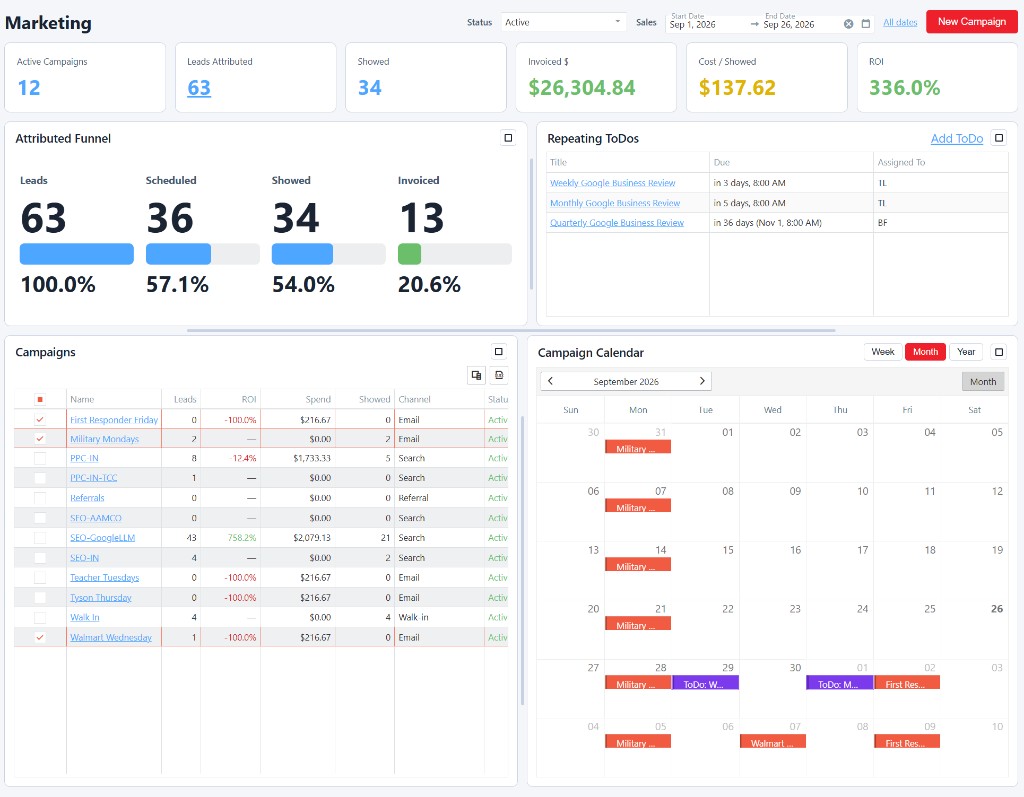
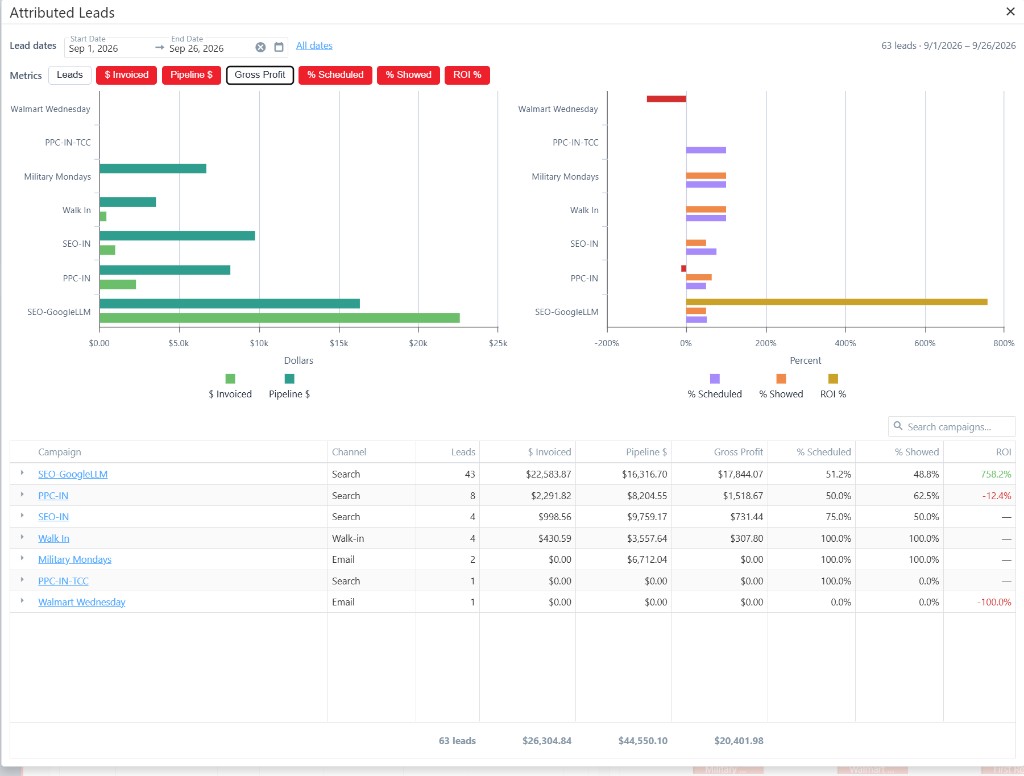
Campaigns stay tied to the opportunities they produced. Open the attributed count and the next action is obvious: work these cars, these repair orders, these dollars.
02 · Call
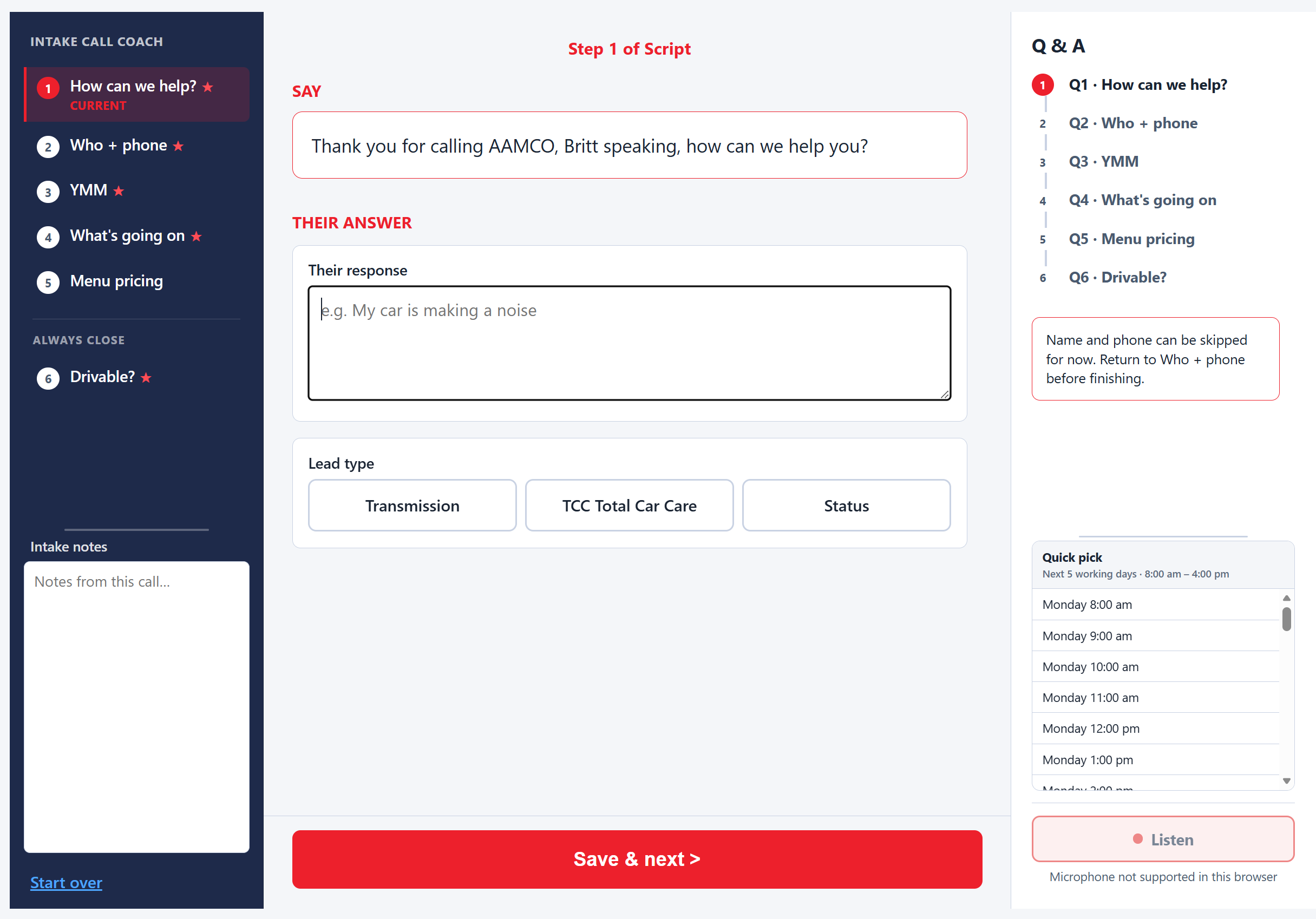
Inbound and outbound aren’t a black hole. The right action — book it, or own the follow-up — is obvious before the customer hangs up.
03 · Call → Appointment
Between the conversation and the calendar, the opportunity has an owner, a next step, and a time. It doesn’t die in a list.
03 · Lead follow-up
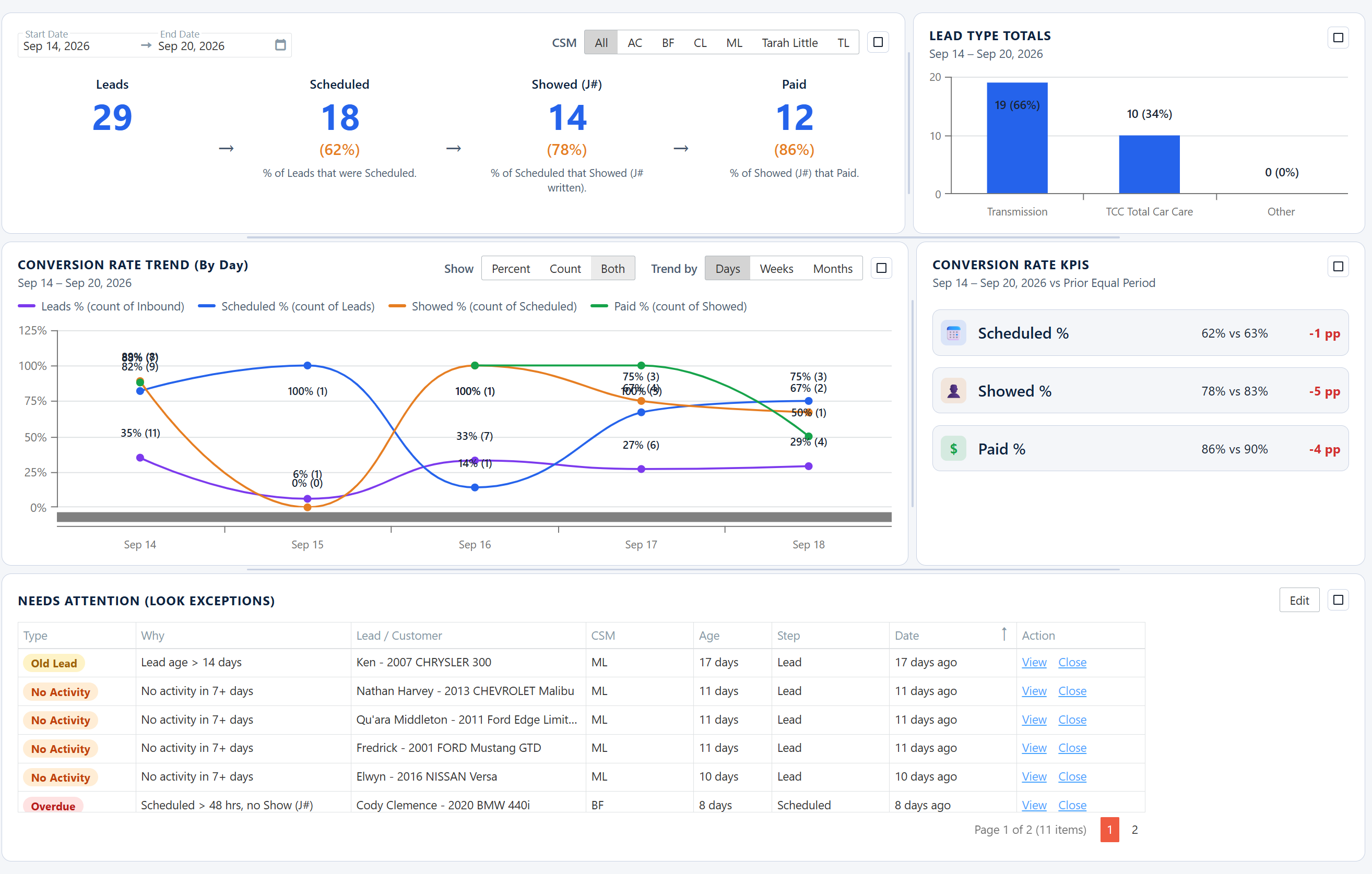
A no-answer, a missed appointment, an estimate waiting on a yes, a price that felt too high. The queue totals what’s still recoverable, and each lead already has a recommended next step — call, text, or email. One converted lead like that can cover ShopOps for the month.
03 · Lead follow-up
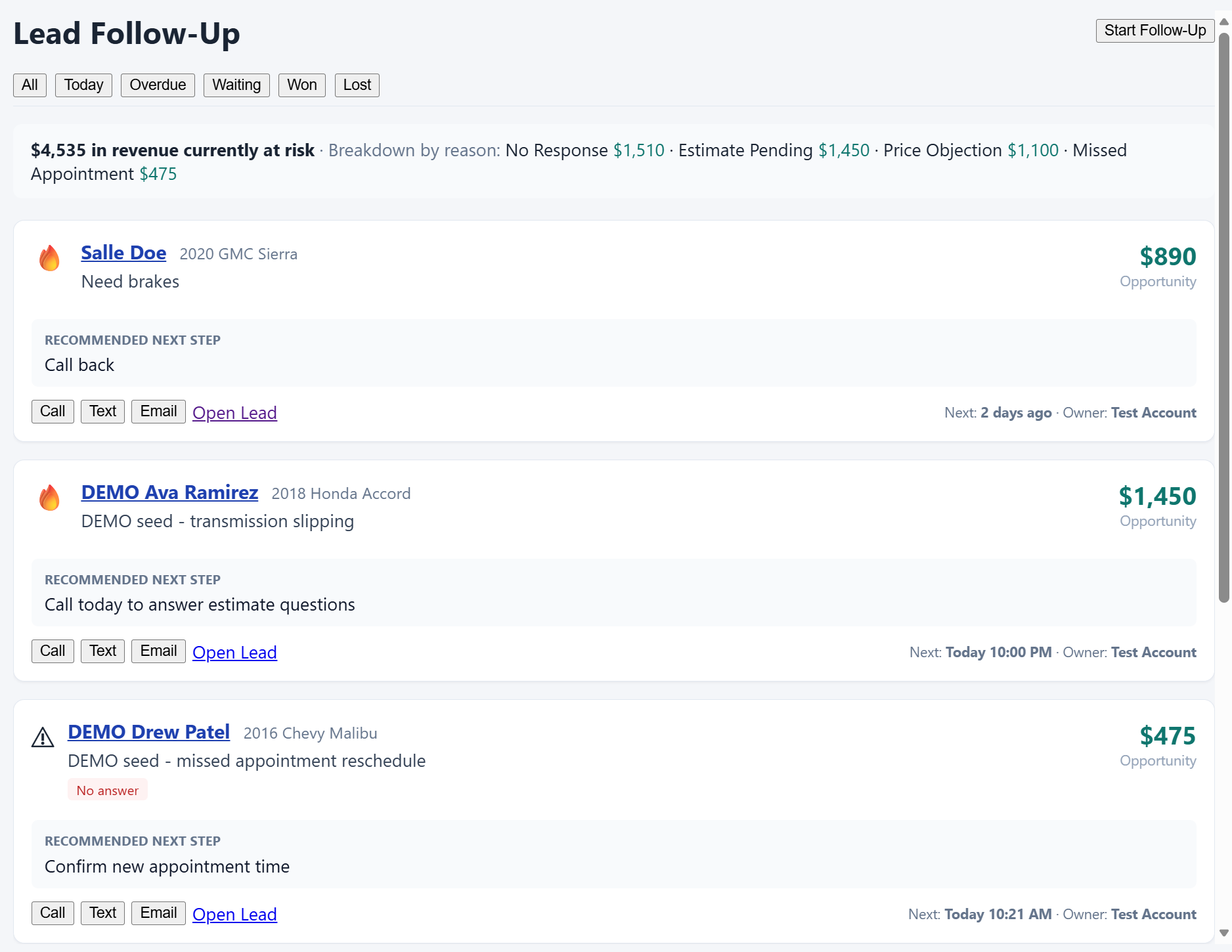
Call, text, or email — the note is already drafted. Mark what the customer said, including a price that’s too high, and the screen tells you what to do next. Then the follow-up gets a date.
04 · Appointment
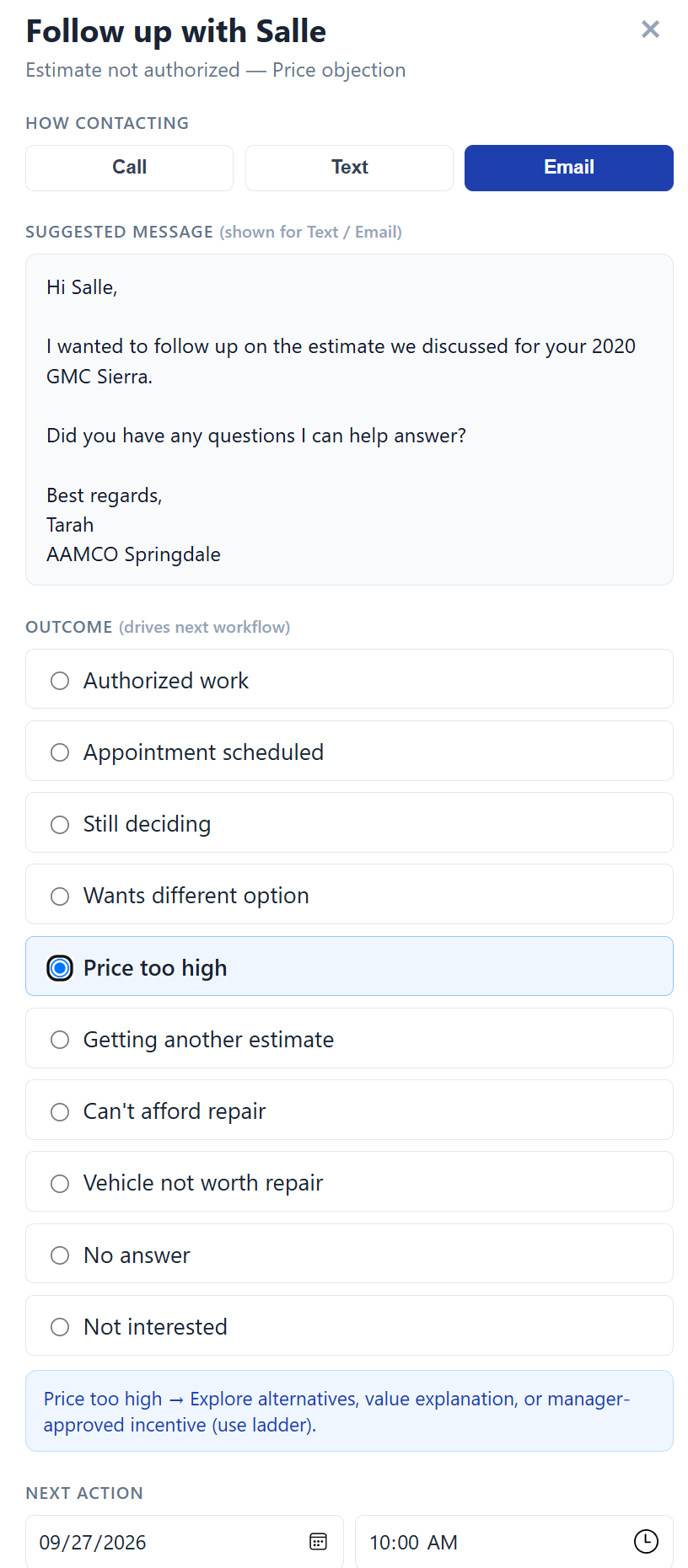
Confirmations, capacity, and “are they really coming?” The appointment isn’t done until the show is likely.
05 · Show
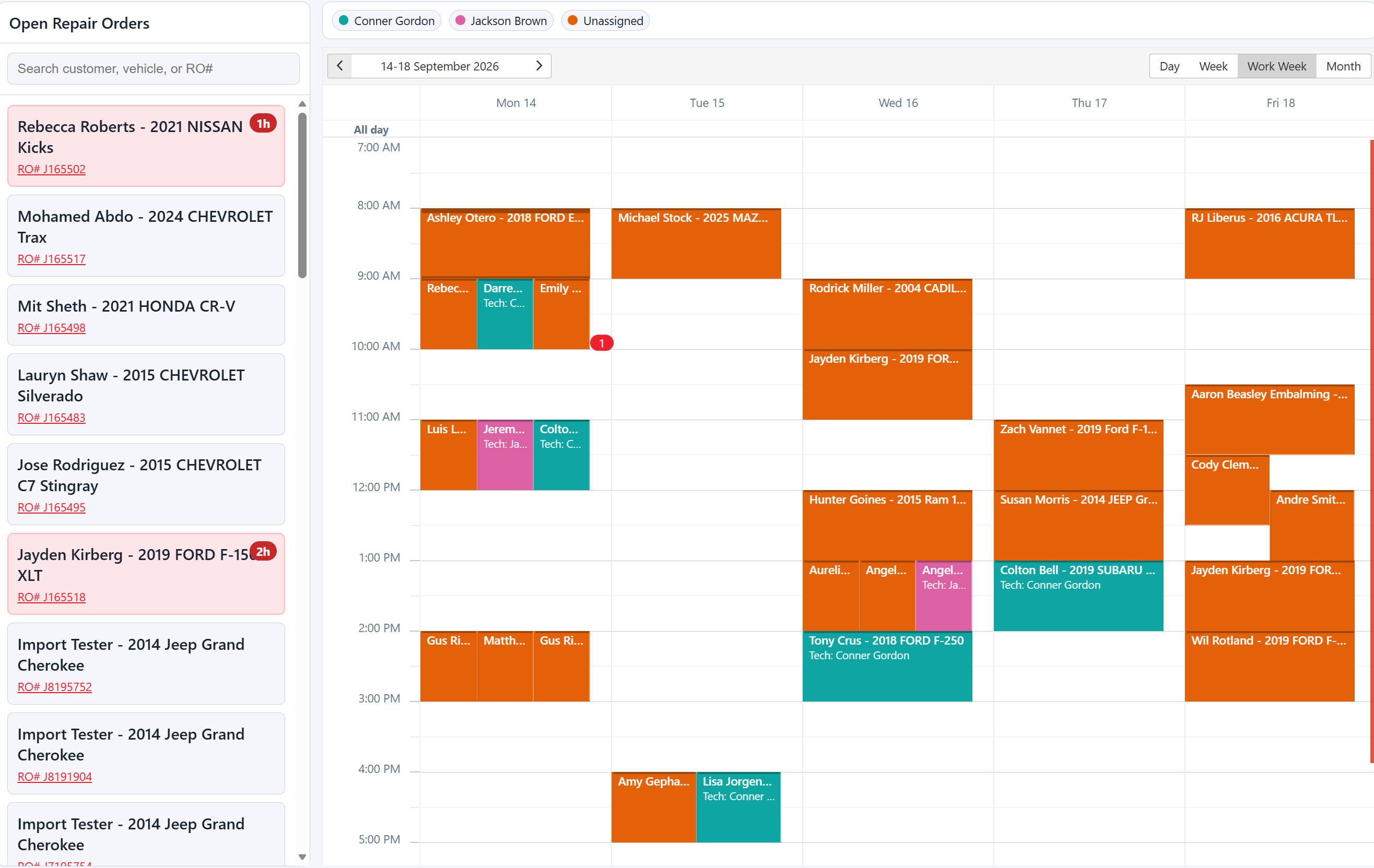
A show is an arrival with a plan. Customer history, vehicle, and reason for visit are already there — so intake is the next action, not a scramble.
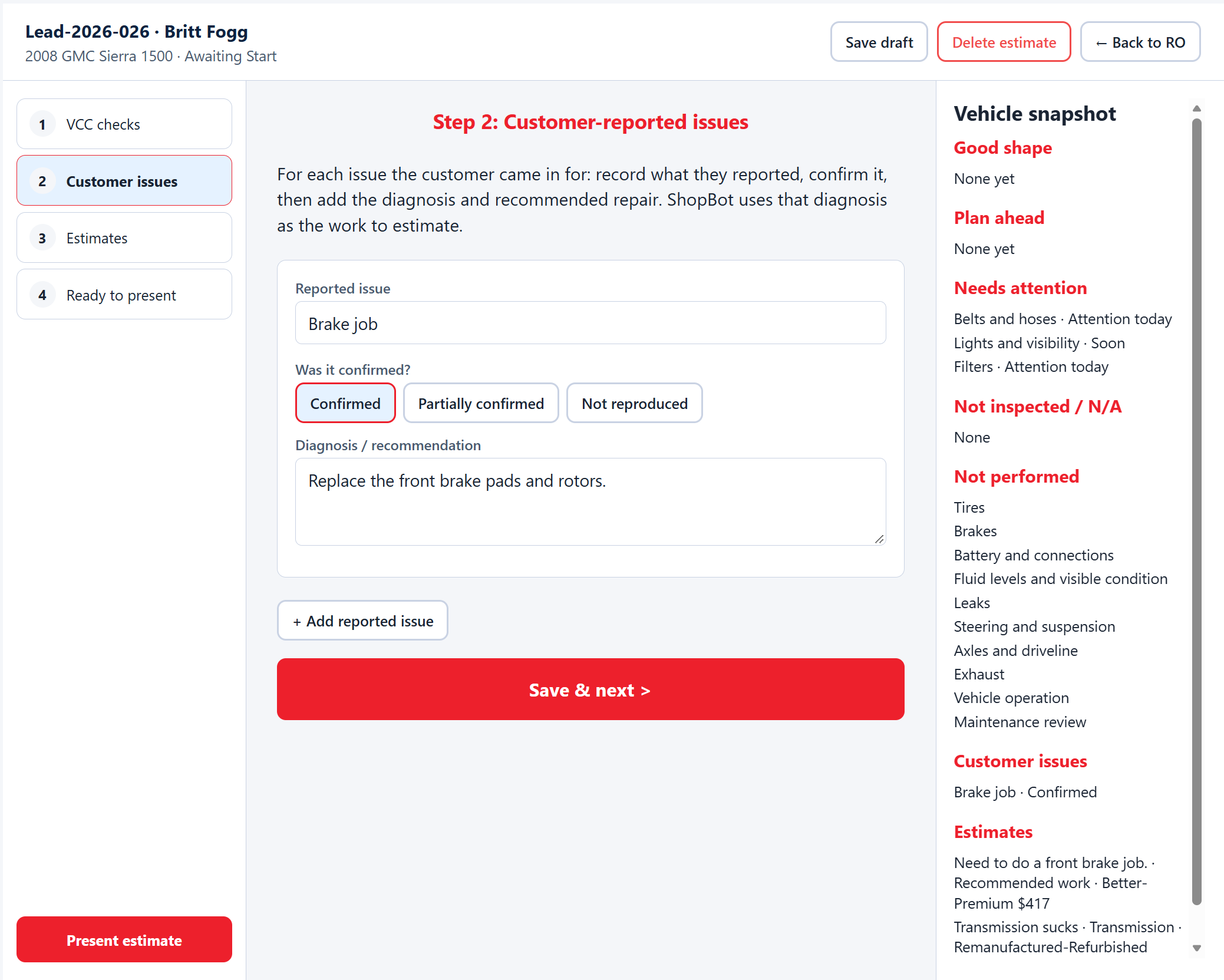
06 · Inspection
Findings captured cleanly so the next action — the estimate — starts from facts, not memory.
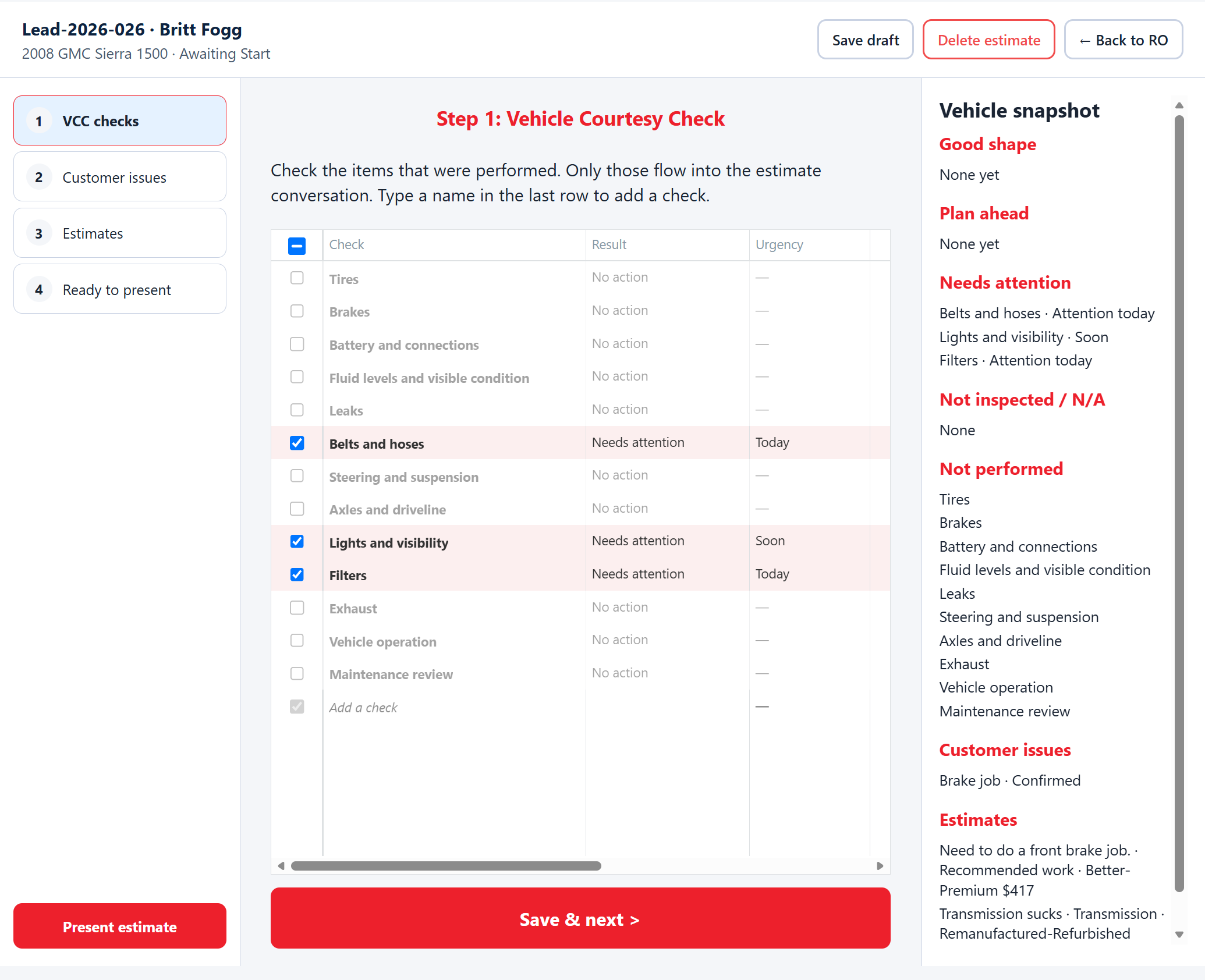
07 · Prepare the Estimate
Options, pricing discipline, and what to say when they hesitate. The estimate’s job is the next action: approval.
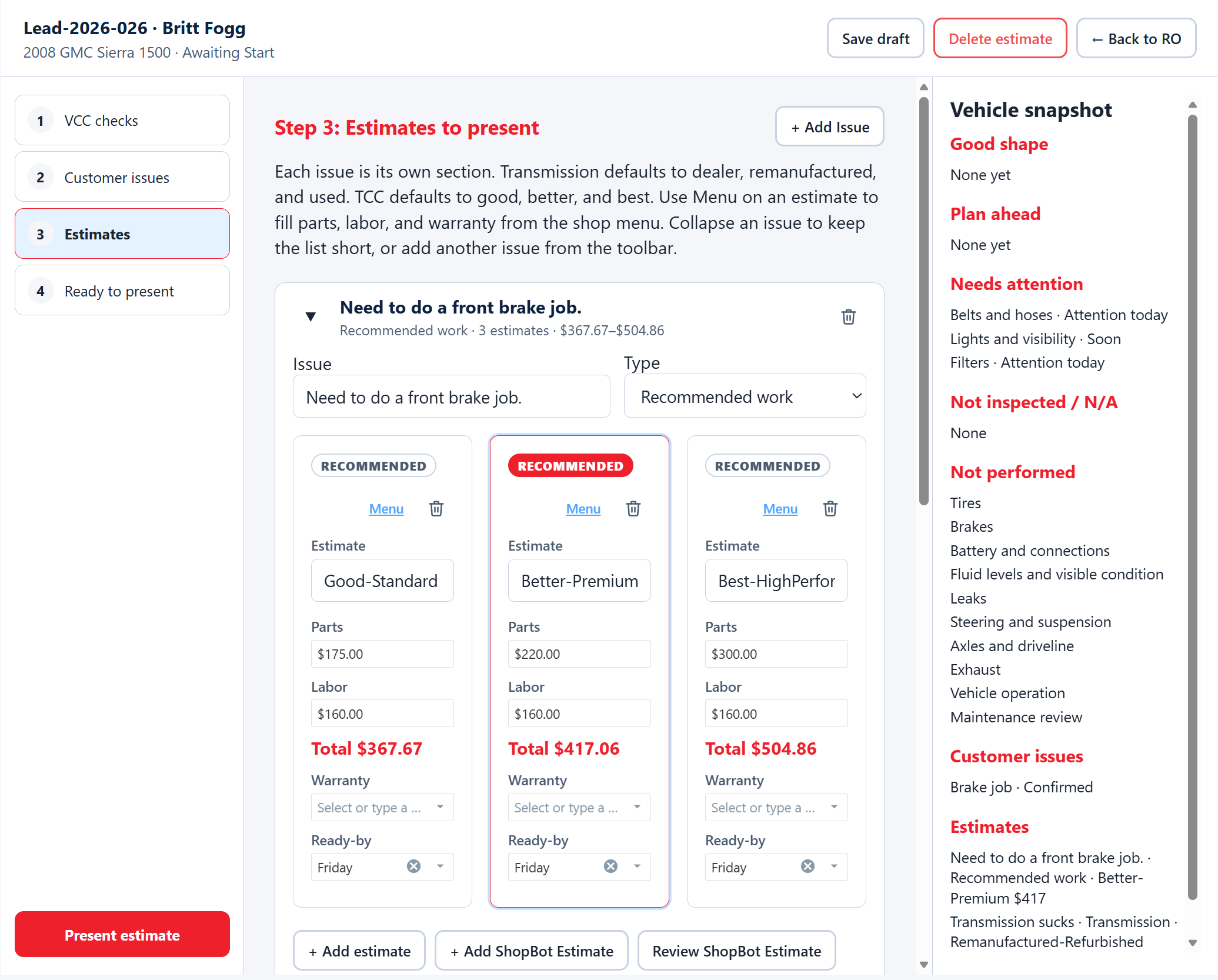
08 · Sell the Estimate
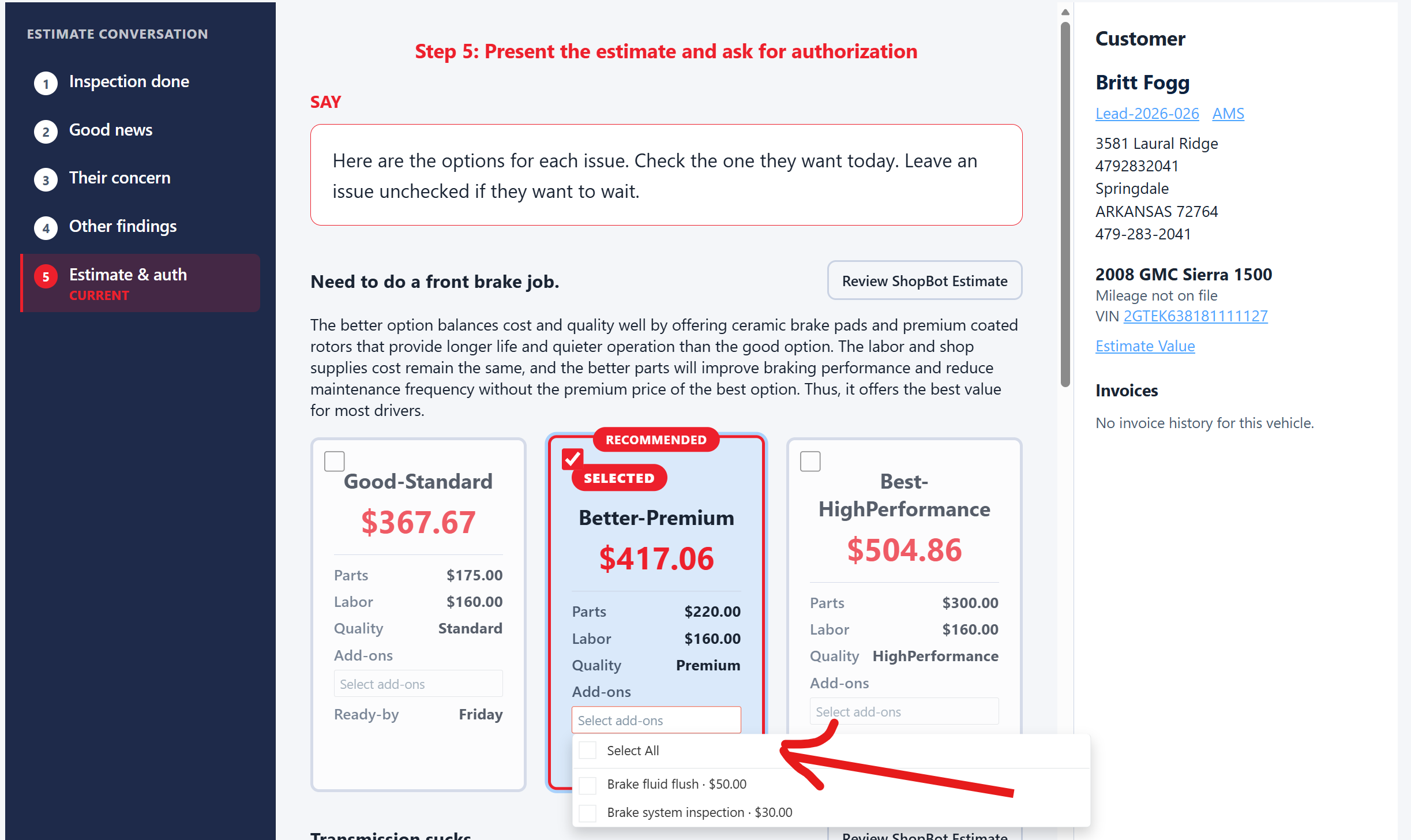
The right recommendation shows up when it belongs. That’s an action on the estimate — advice they can approve — not a random add-on.
10 · Repair
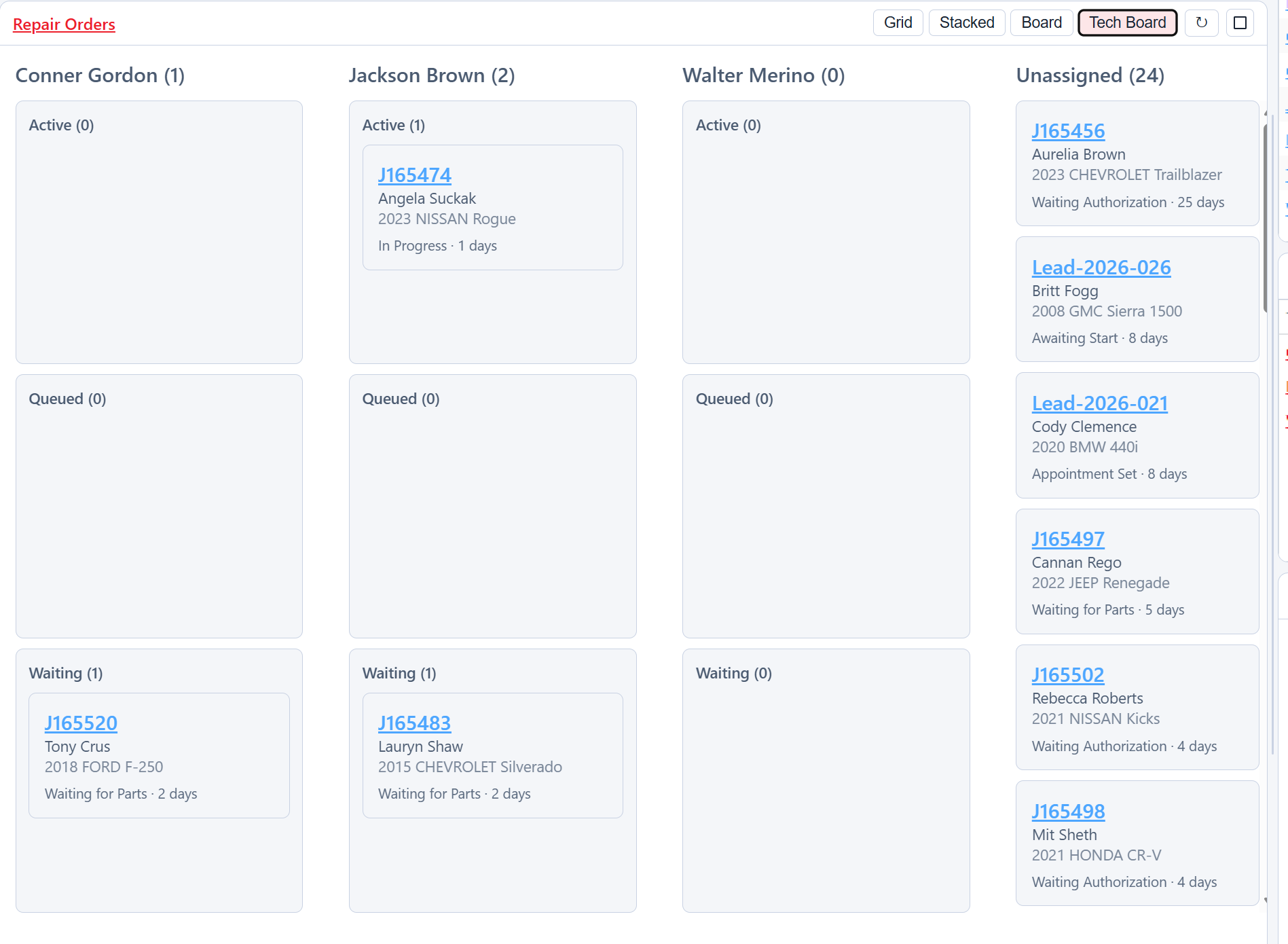
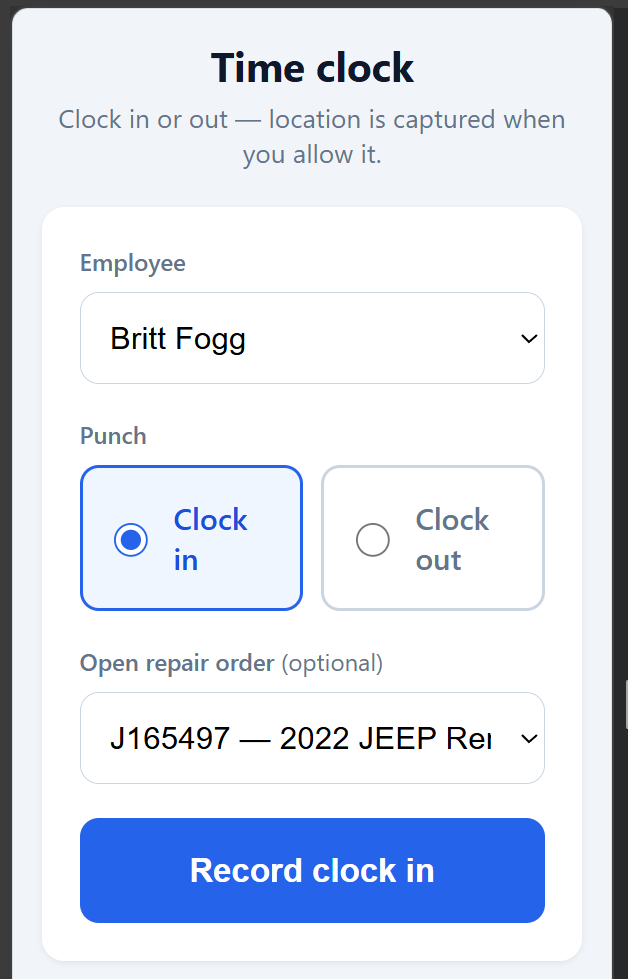
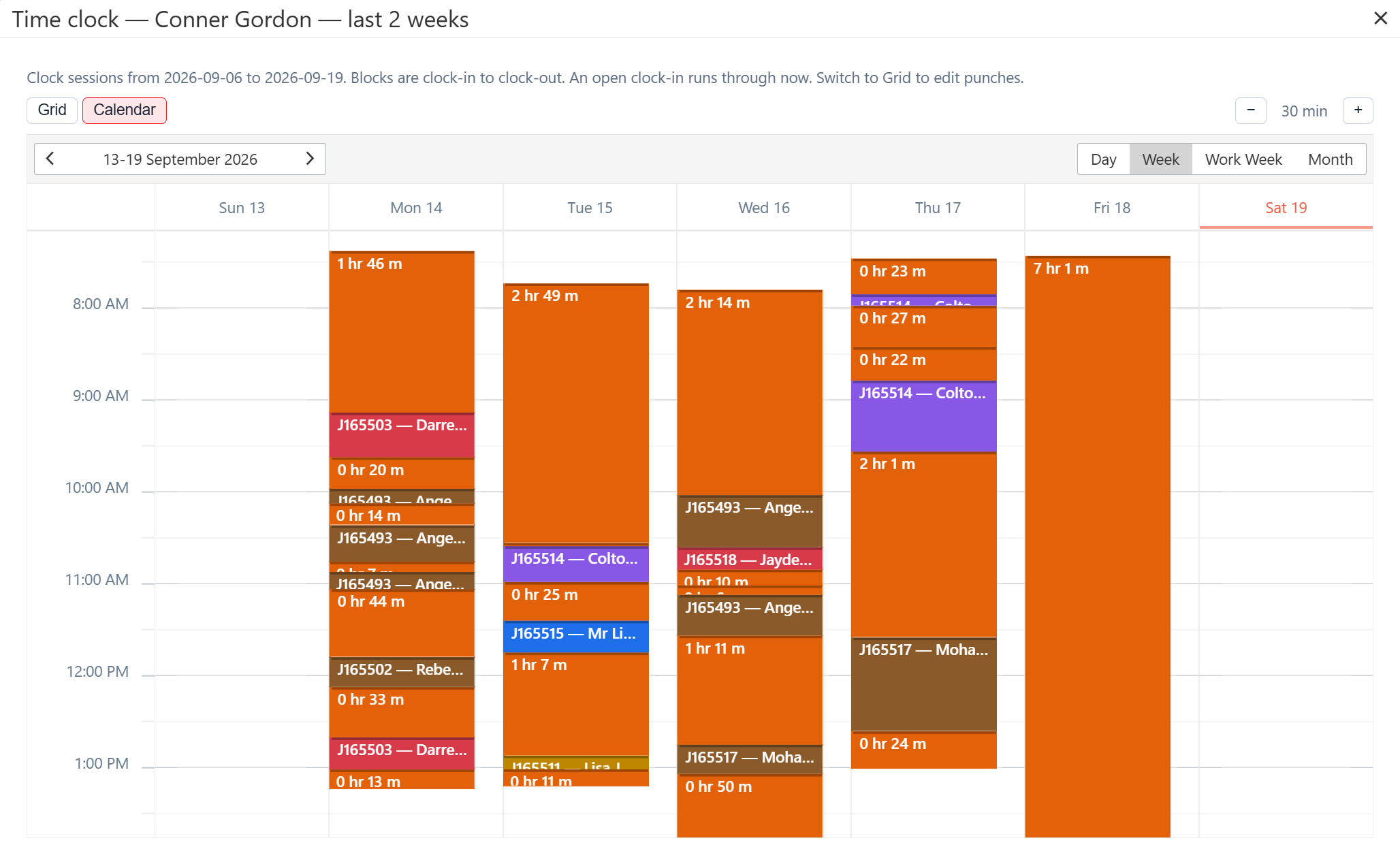
Status, blockers, and who’s on what stay on the board. Techs clock in on the repair order — so leadership knows where the time is going, not just that the car is in a column. Less chasing. More finishing.
11 · Margin
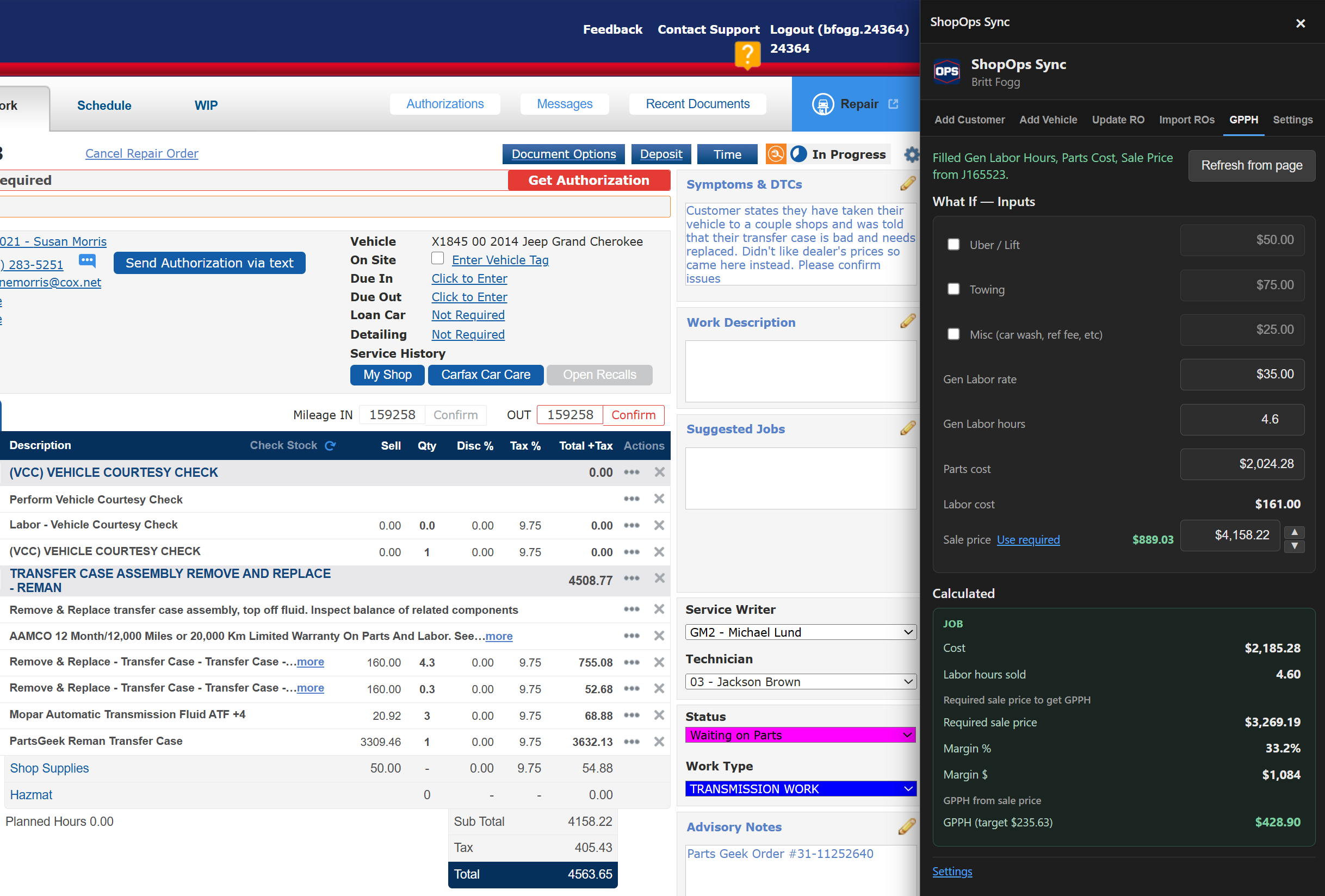
Sold is not the same as profitable. Gross profit per hour is on the repair order in front of you — so the question isn’t the number. It’s so what, is that good or bad, and what now.
12 · Pickup → Return → Referral
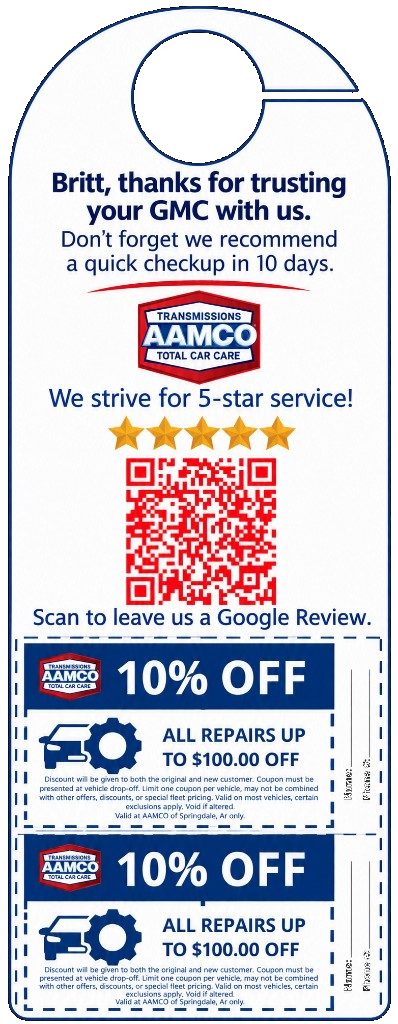
A clean pickup isn’t the end of the ticket. It’s how they come back, and how they send someone else. That visit turns the wheel.
Nothing falls through
The right action stays visible. Follow-ups don’t live on sticky notes. The chain holds from marketing to referral.

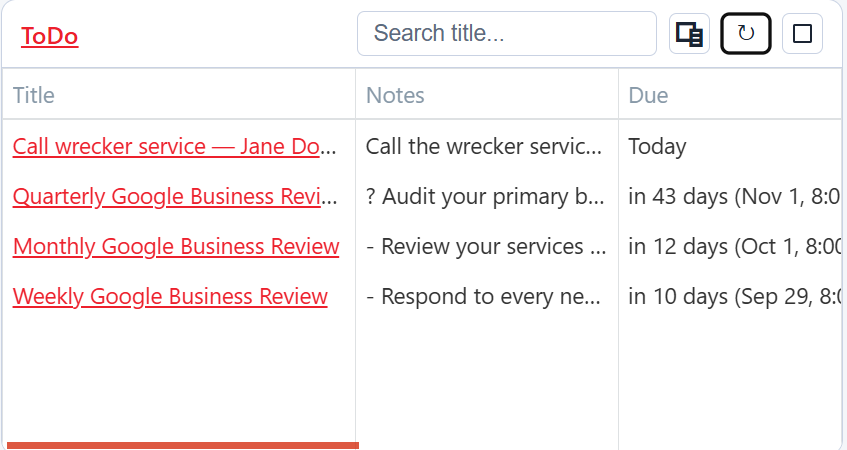
See the stage where the next action stalled — before the opportunity goes cold or an approved repair sits untouched.
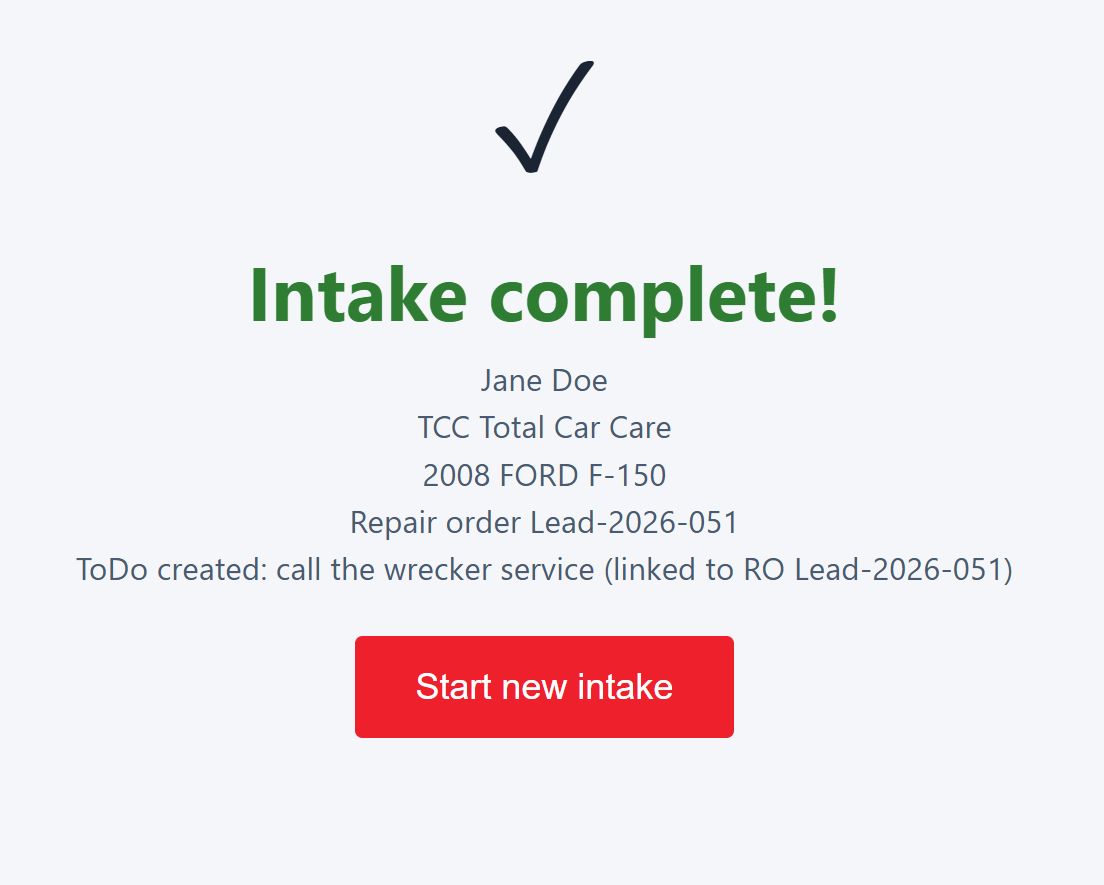
The next action is prompted. Callbacks, parts, promises, deferred work — easy to execute, not held in someone’s head.
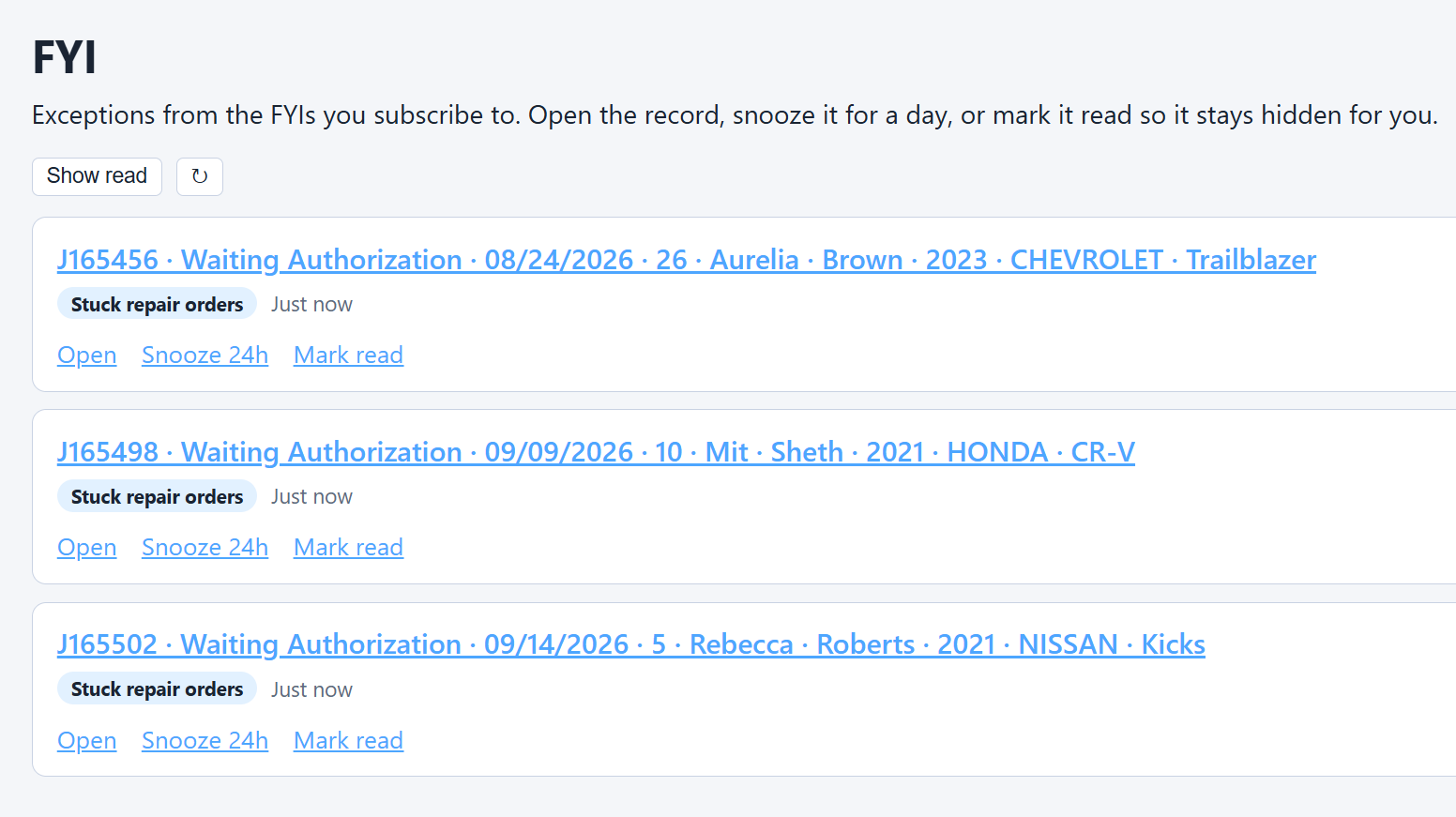
The customer’s next step is as clear as the shop’s. Pickup is a confirmation, not a confrontation.
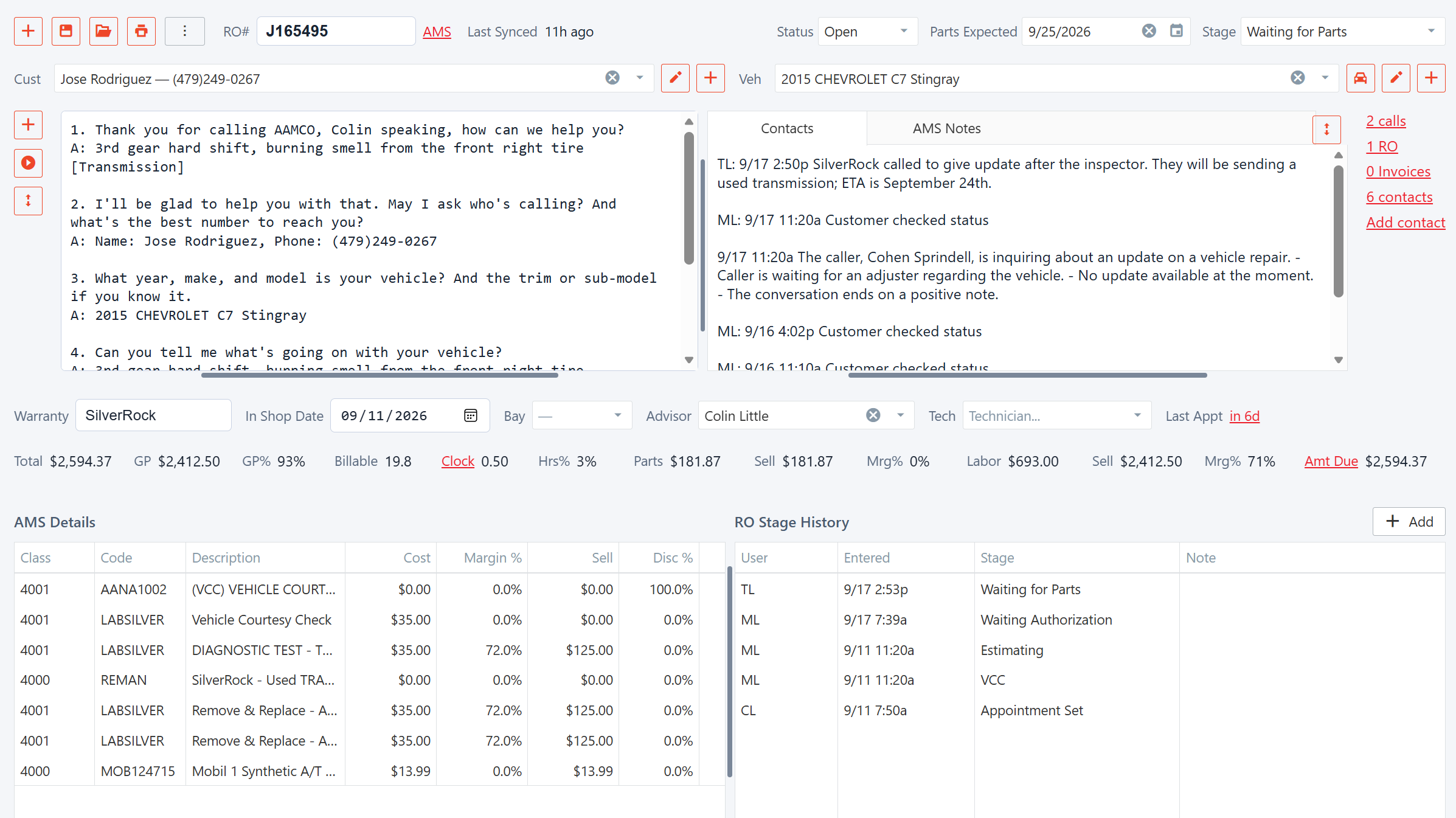
History, preferences, and open loops ride with the car — so the right action starts from what you already know.
Leadership pulse
A number that doesn’t change what someone does next is just a report. Every pulse in ShopOps answers three questions — then makes the action easy to take.
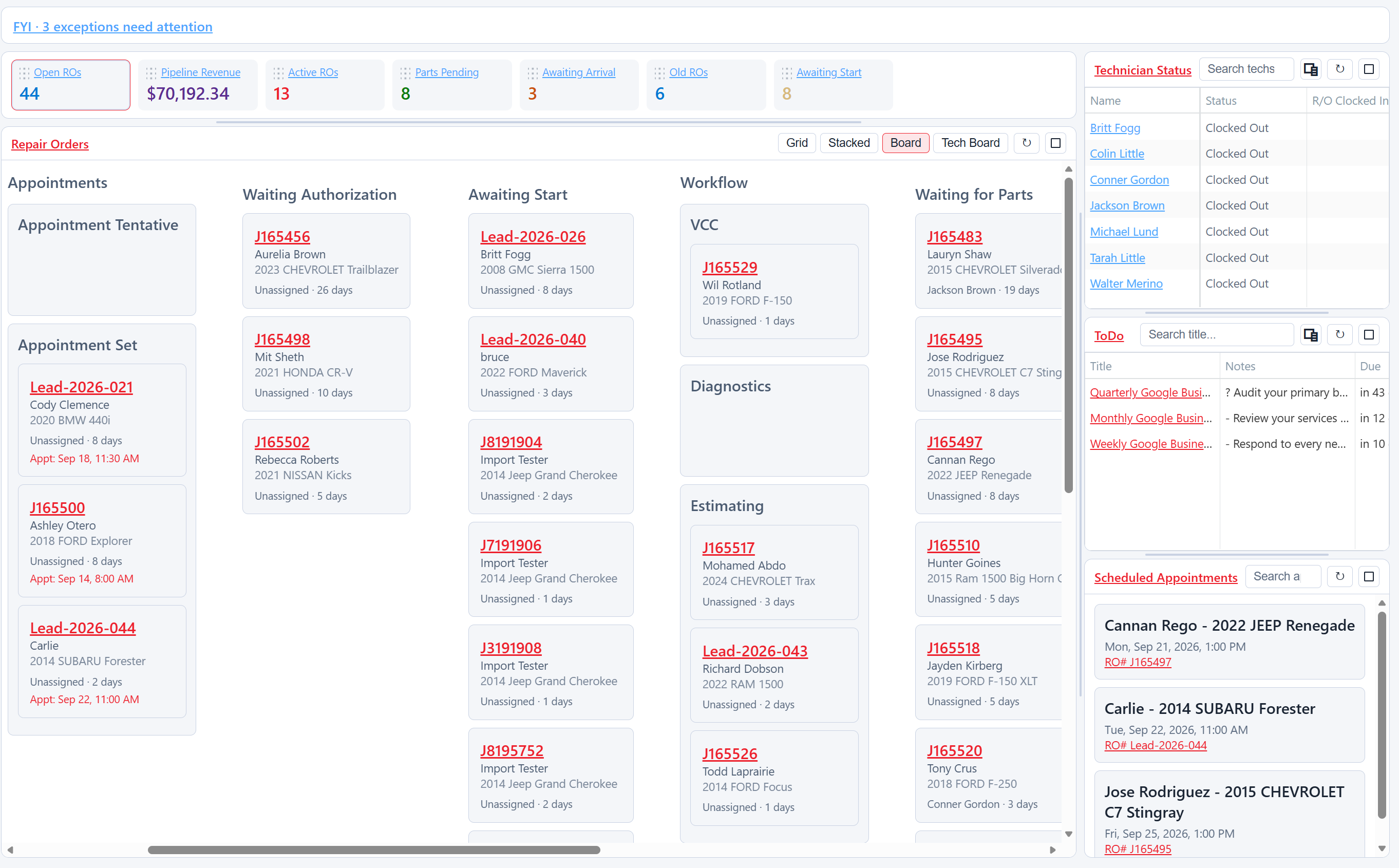
Today’s flow — calls, shows, approvals, cars in process. Where the chain is healthy, and where the next action is late.
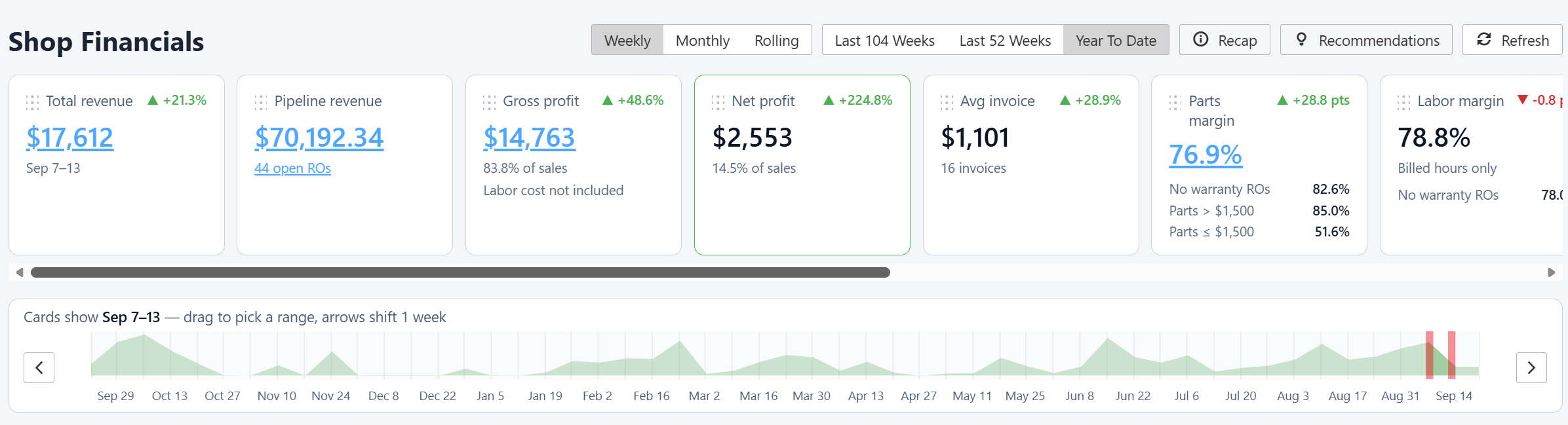
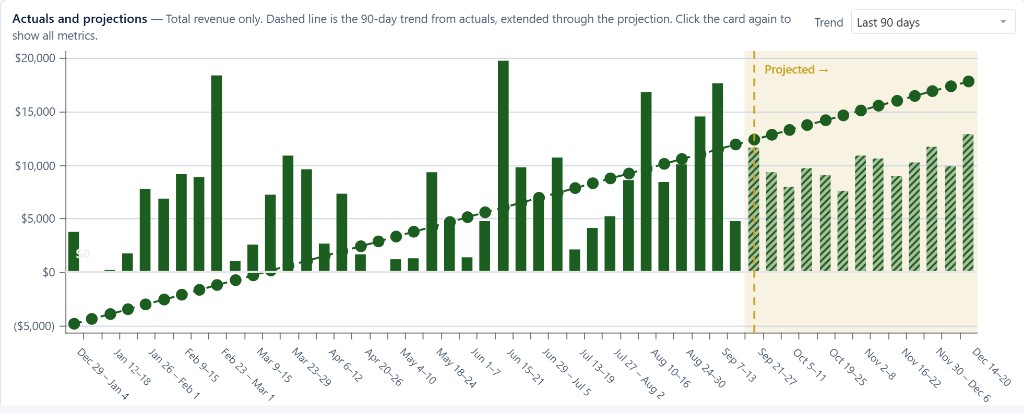
Refresh invoices from AMS and you already know the day and the week — no waiting on the WBR sometime Monday. Revenue, profit, margin: good or bad against the week you needed, and what to do about it.
GPPH without the spreadsheet. On the AMS repair order, in front of you. If the margin is bad, what now is a pricing or dispatch decision — not a spreadsheet after the car is gone.
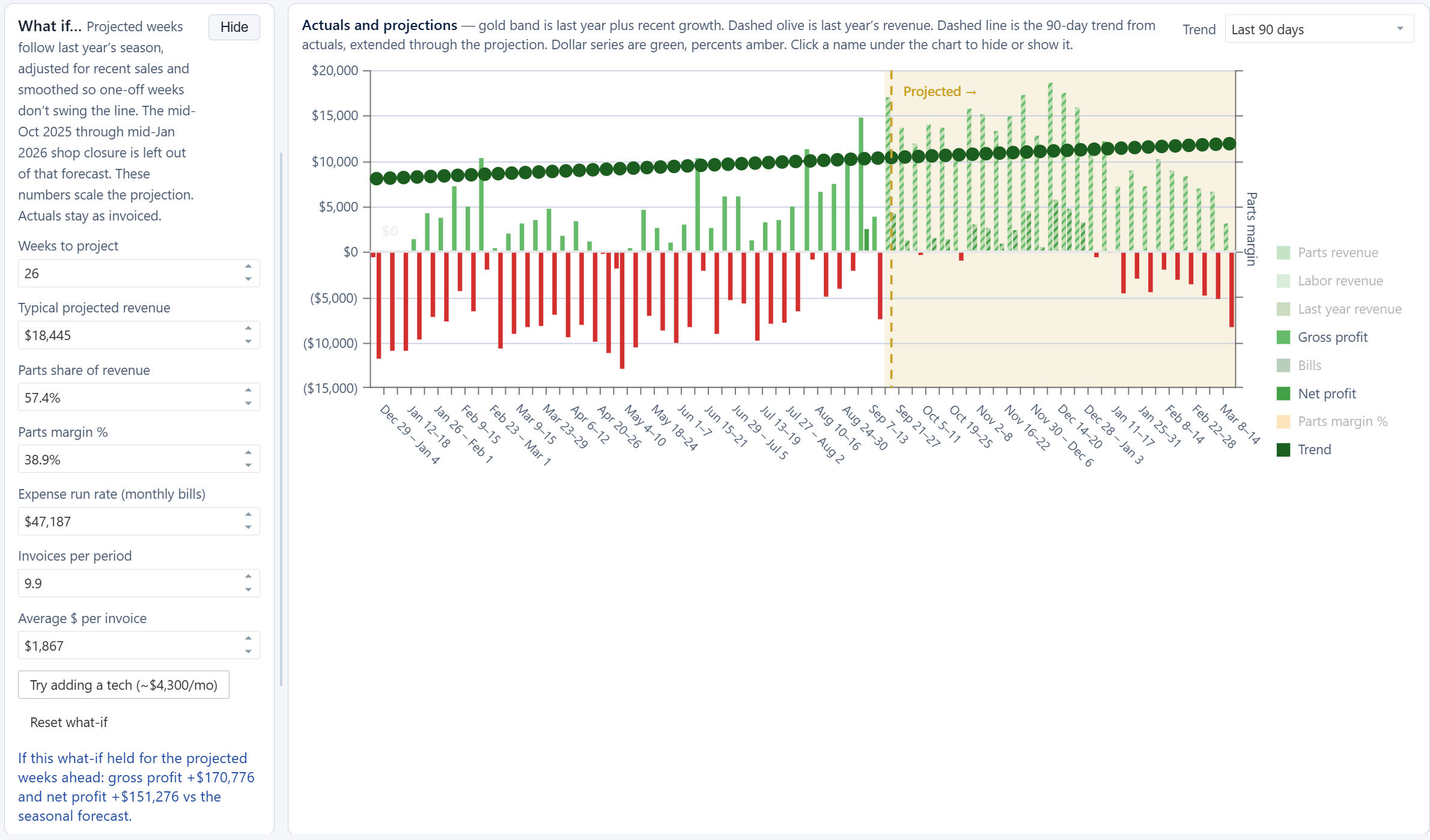
Staffing, pricing, capacity — try it before you change the shop. A scenario only counts if it tells you what to do next.
Who needs a coaching action today. Not a scoreboard to stare at — the next conversation, with the person who needs it.
Demos
Marketing, intake, the estimator, and operations are up. Each workflow gets its own walkthrough as it’s ready.
Next step
We’ll walk marketing through referral — where opportunities leak, what to do next, and how AMS stays the record while ShopOps makes the action obvious.